


EXOPLANETS
Overview
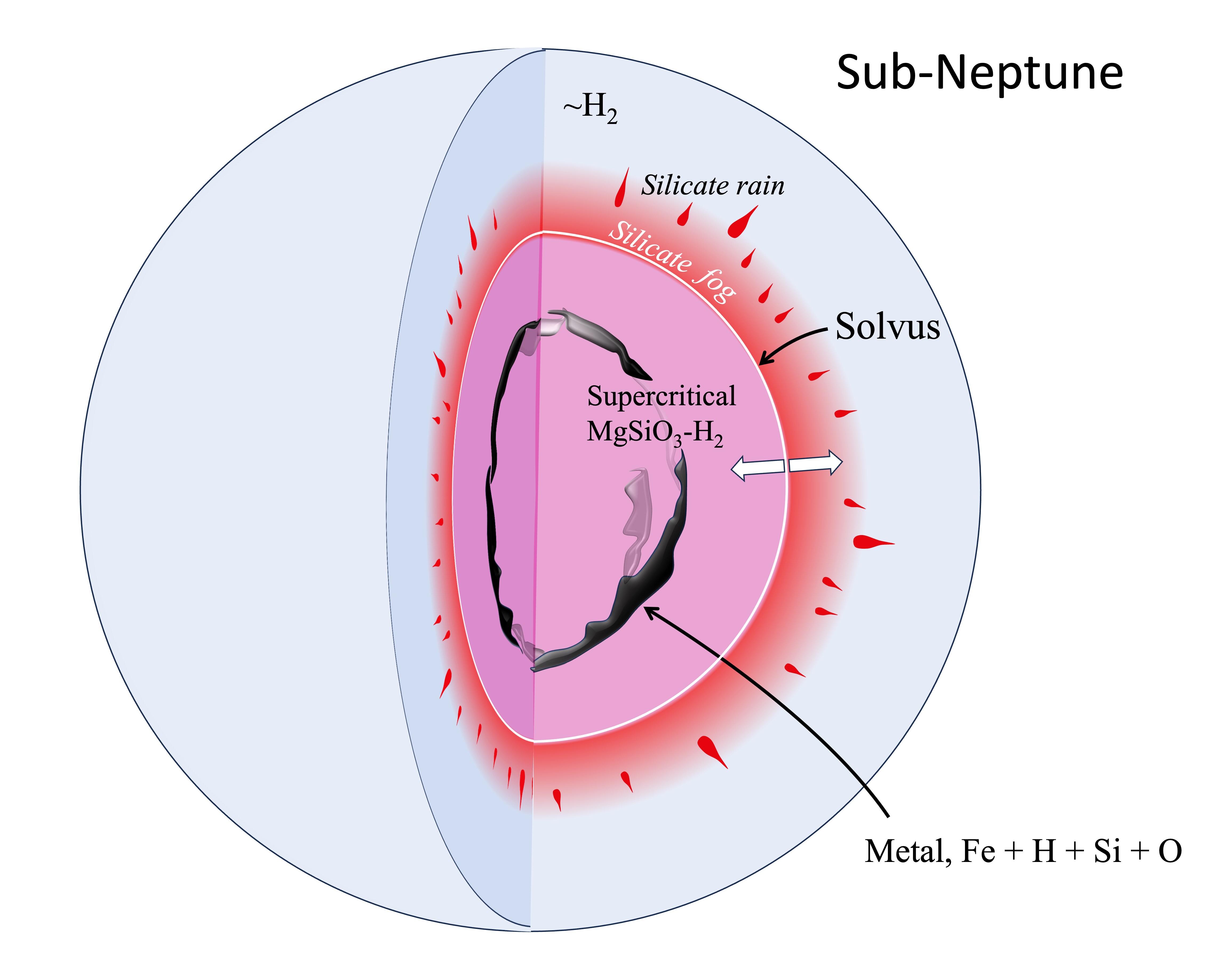
We are characterizing the physical chemistry and structure of sub-Neptunes and super-Earths. We proposed that the cores of sub-Neptunes are fully miscible, supercritical mixtures of molten silicate, molten iron, and hydrogen based on the physical chemistry of the silicate-hydrogen-iron system.
The concept that many sub-Neptune planets are likely composed of a molten core overlain by
hydrogen-rich envelopes, with the boundary being a first-order phase transition (the binodal)
defined by hydrogen-silicate miscibility was put forward by Young et al. (2024) and is illustrated here:
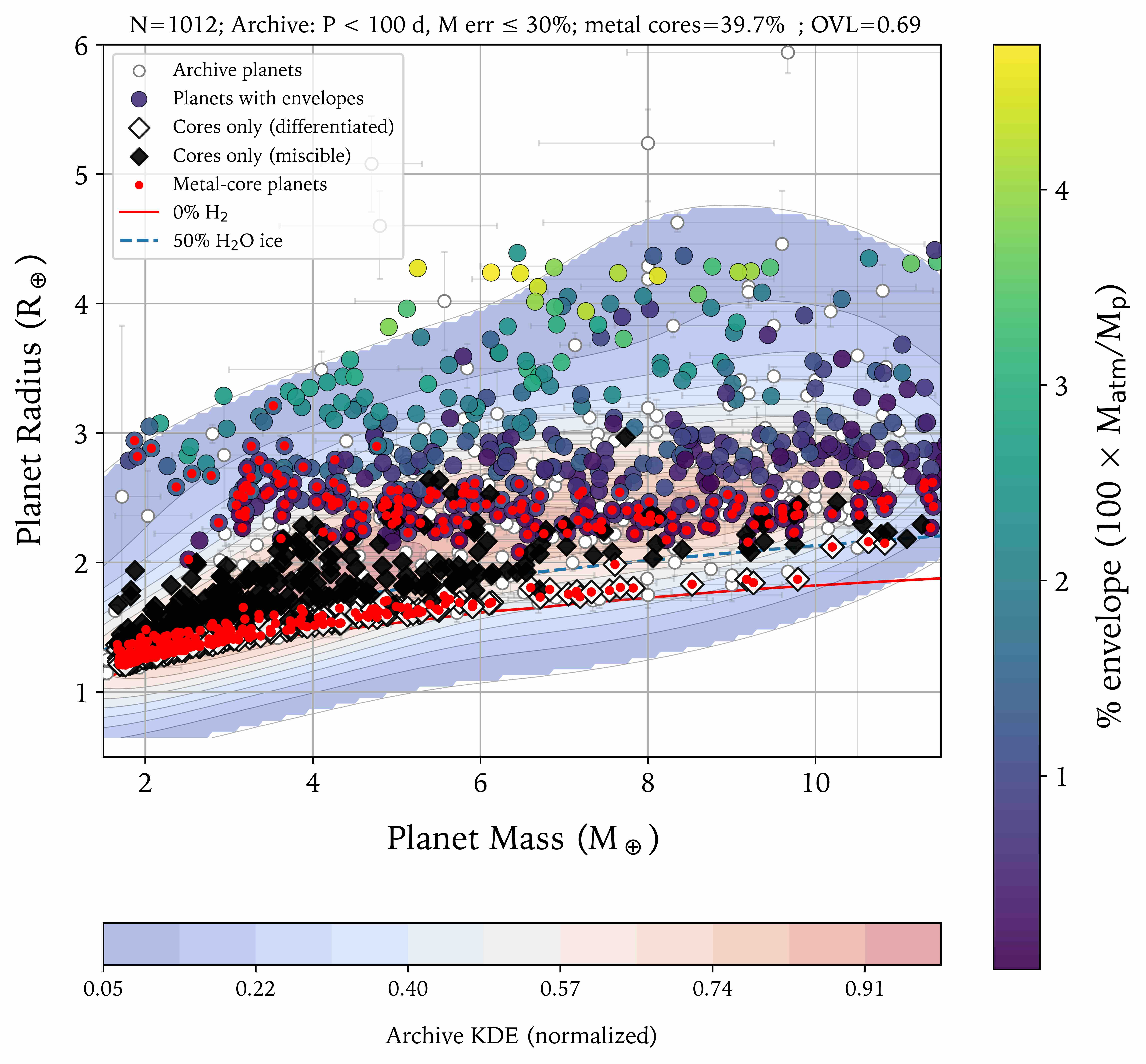
We investigated the influence of hydrogen-silicate melt miscibility on the demographics of
sub-Neptune planets, providing insights into the different types of structures comprising this important
group of planets (Young and Werlen, 2026):
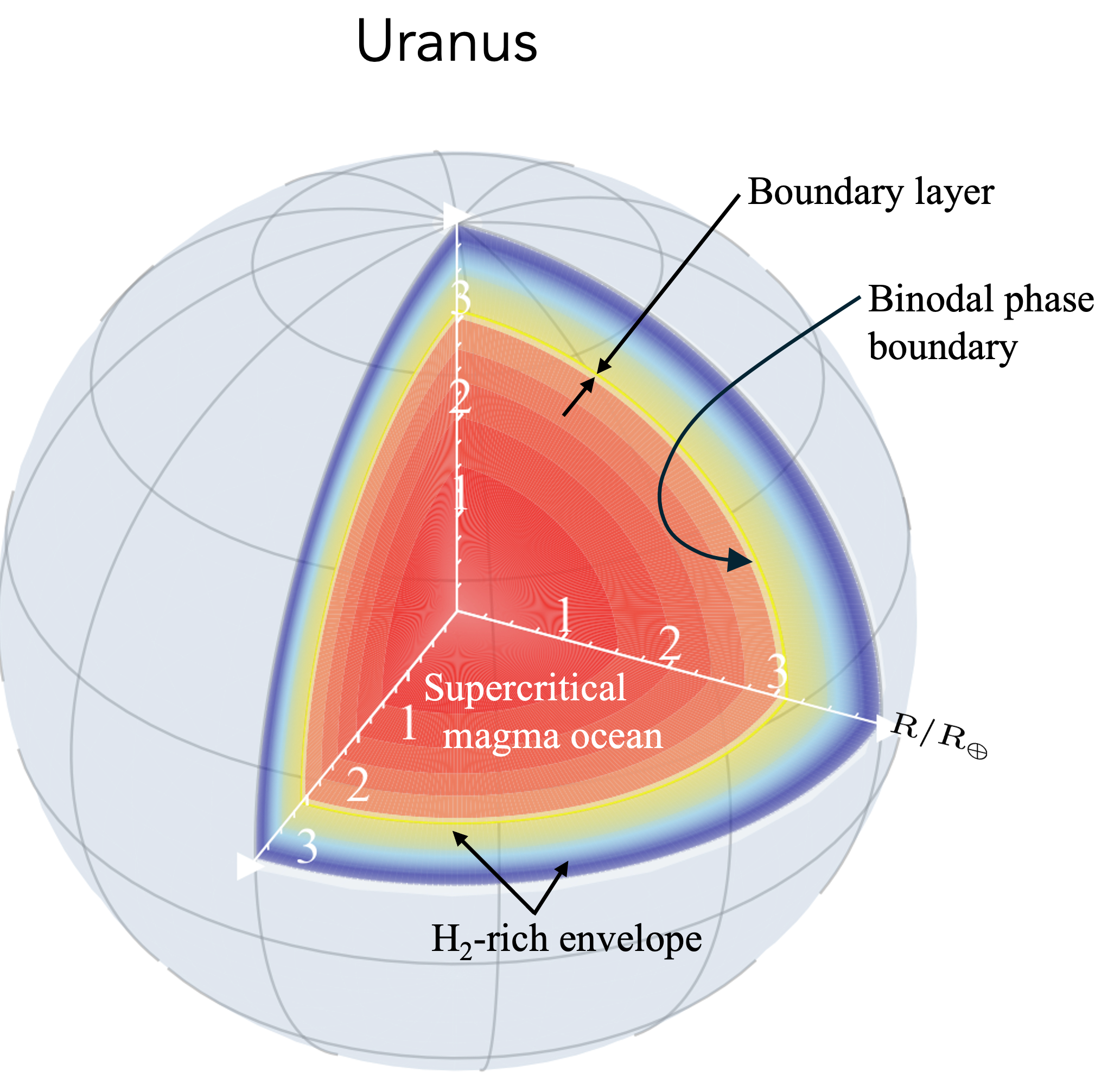
Recently we applied our models for sub-Neptunes to the ice giants as a test of their applicability to gas-dwarf planets in general (Young et al., 2026):
A new paper has just been submitted from our group on the formation of gas-dwarf planets in general by the process of hydrogen engulfment, comments welcome (Young, in review). The animation shows the evolution of a sub-Neptune based on this model:
Global Chemical Equilibrium
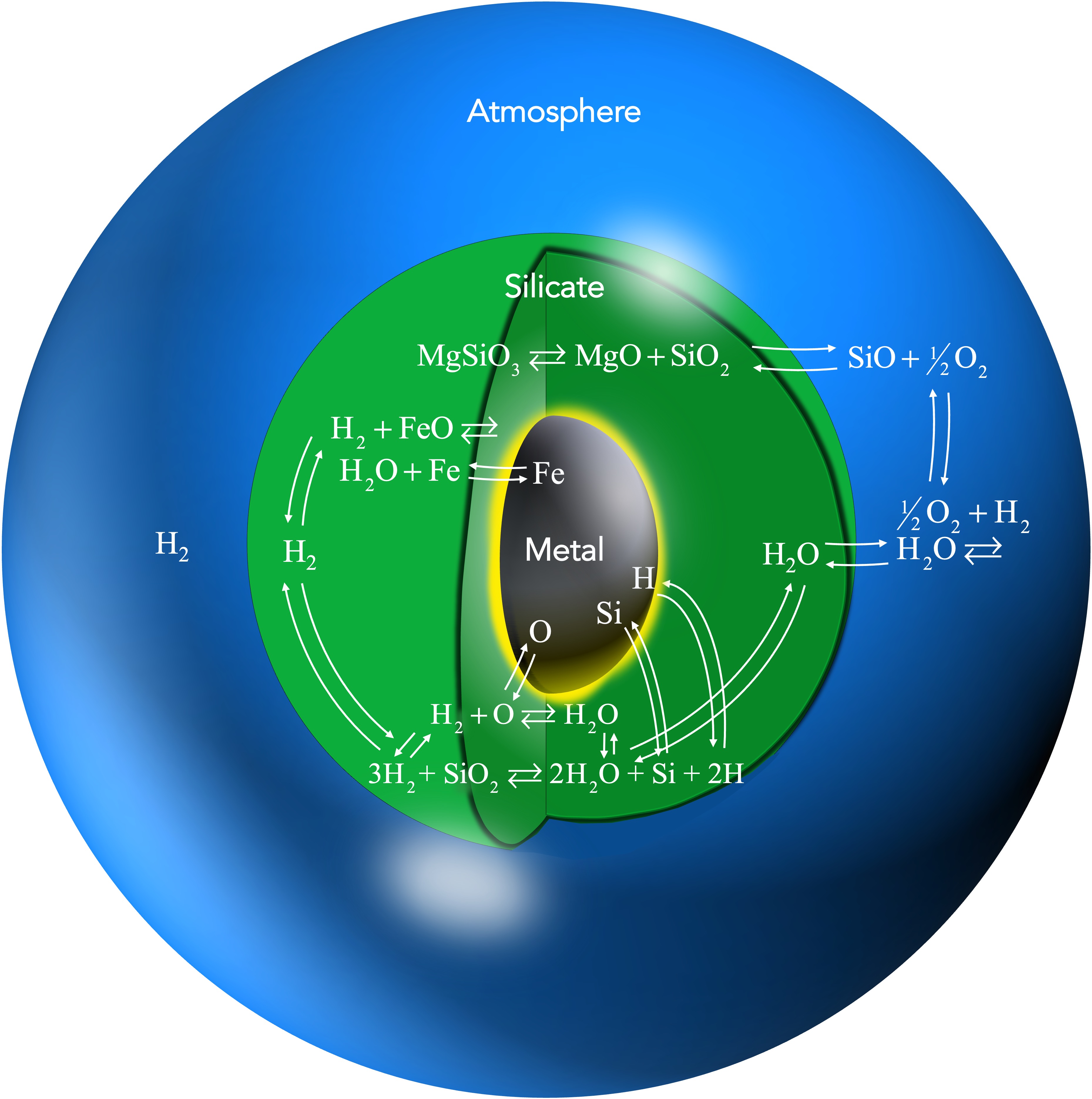
The extrasolar planet group at UCLA pioneered the application of global-scale thermodynamic equilibrium to planets, with an emphasis on sub-Neptunes (Schlichting and Young, 2022). This work showed that reactions between hydrogen-rich envelopes and molten cores can profoundly influence the chemistry and structure of these planets. One of these influences is the production of copious amounts of water, illustrated below.
Physical Chemistry at Extreme Conditions
We make use of ab initio molecular dynamics to constrain the physical chemistry of relevant materials, including hydrogen, silicates, and metals. Results replace classical models for gas-dwarf sub-Neptunes, in which hydrogen atmospheres sit atop magma oceans, with a new model in which the boundary between a hydrogen envelope and a supercritical mixture of hydrogen and melt is a first-order phase transition (Young et al., 2024). An example ternary phase diagram for the system MgSiO3-H2-Fe after (Young et al., 2025) is shown below in animated form. The sequence is along an adiabat in the interior of a 6 Earth-mass sub-Neptune with 3% by mass total H2, with the bulk composition of the interior indicated by the neptune-circle symbol:
Codes
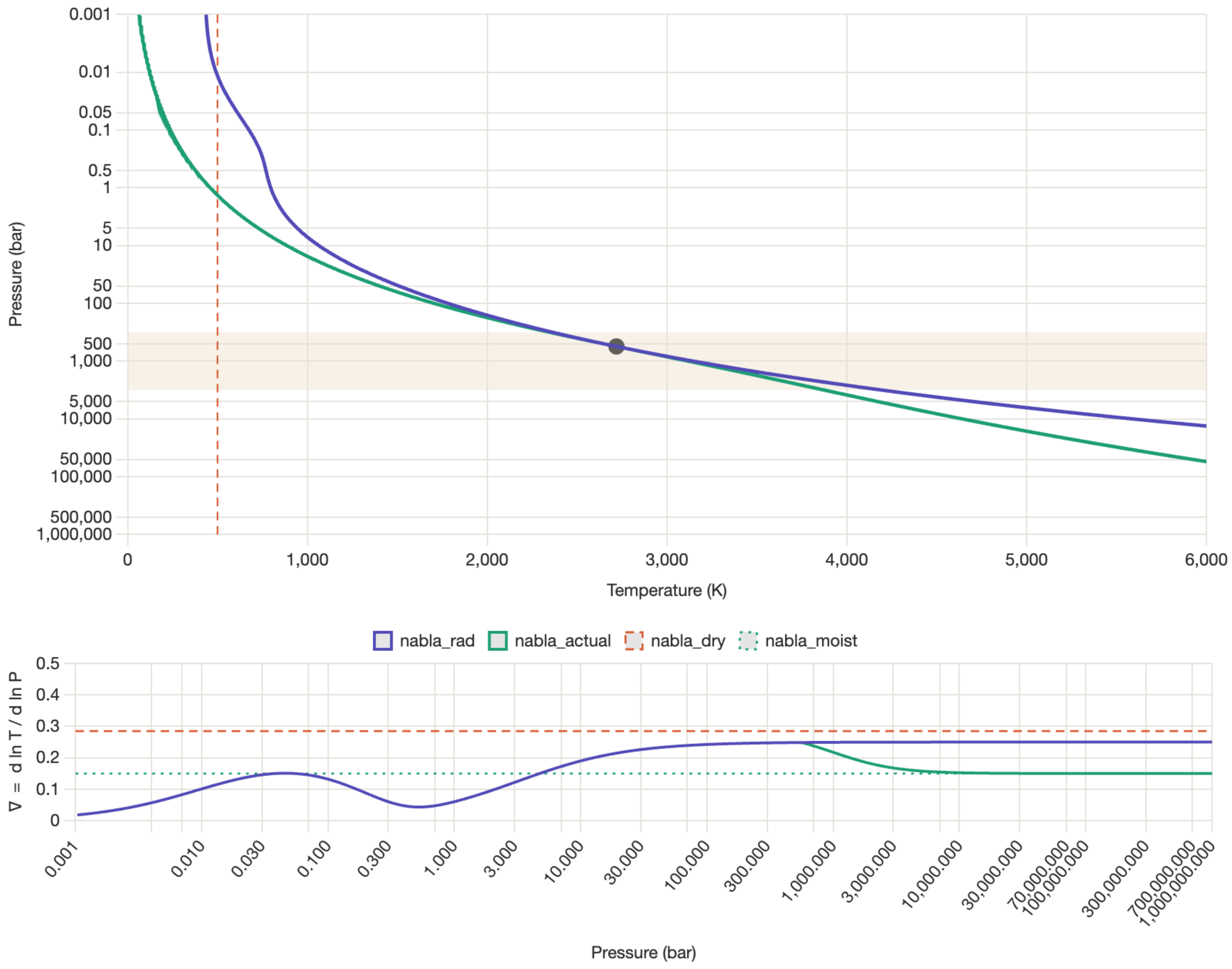
Useful two-stream atmosphere tool (click image to explore):
Planet modeling codes from our laboratory with collaborators:
| Code | Description | Repository |
|---|---|---|
| PlanetLab | Python code to simulate sub-Neptune planets | GitHub |
| G plane | Python code to calculate ternary phase diagrams in the MgSiO3-Fe-H2 system | GitHub |
| GlobalChemEquil | Global chemical equilibrium code (ETH version) | GitHub |