Young Lab – Exploring Our Place in the Galaxy
|
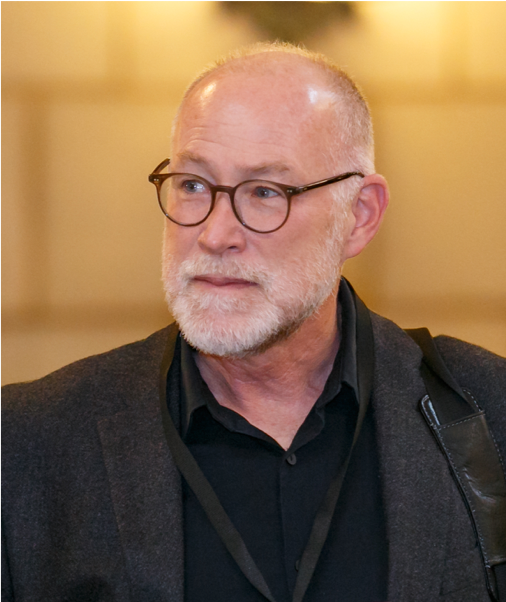
I am Distinguished Professor of Cosmochemistry and Geochemistry at UCLA. My research spans isotope geochemistry, cosmochemistry, planetary science, atmospheric chemistry, microbiology, and exoplanetary science. My group uses tools ranging from mass spectrometers to large telescopes. These disparate fields comprise a coherent research program centered on two related questions: How do kinetics, thermodynamics, and transport under relevant conditions combine to produce the physical, chemical, and isotopic signatures we observe in planetary and protoplanetary materials? What can these signatures tell us about our origins? The objects of study vary dramatically, but they rely on the same intellectual strategy. Recent highlights are featured below; visit the Research or Publications tabs to explore our broader research program. |
|||
|
|
|
|
|
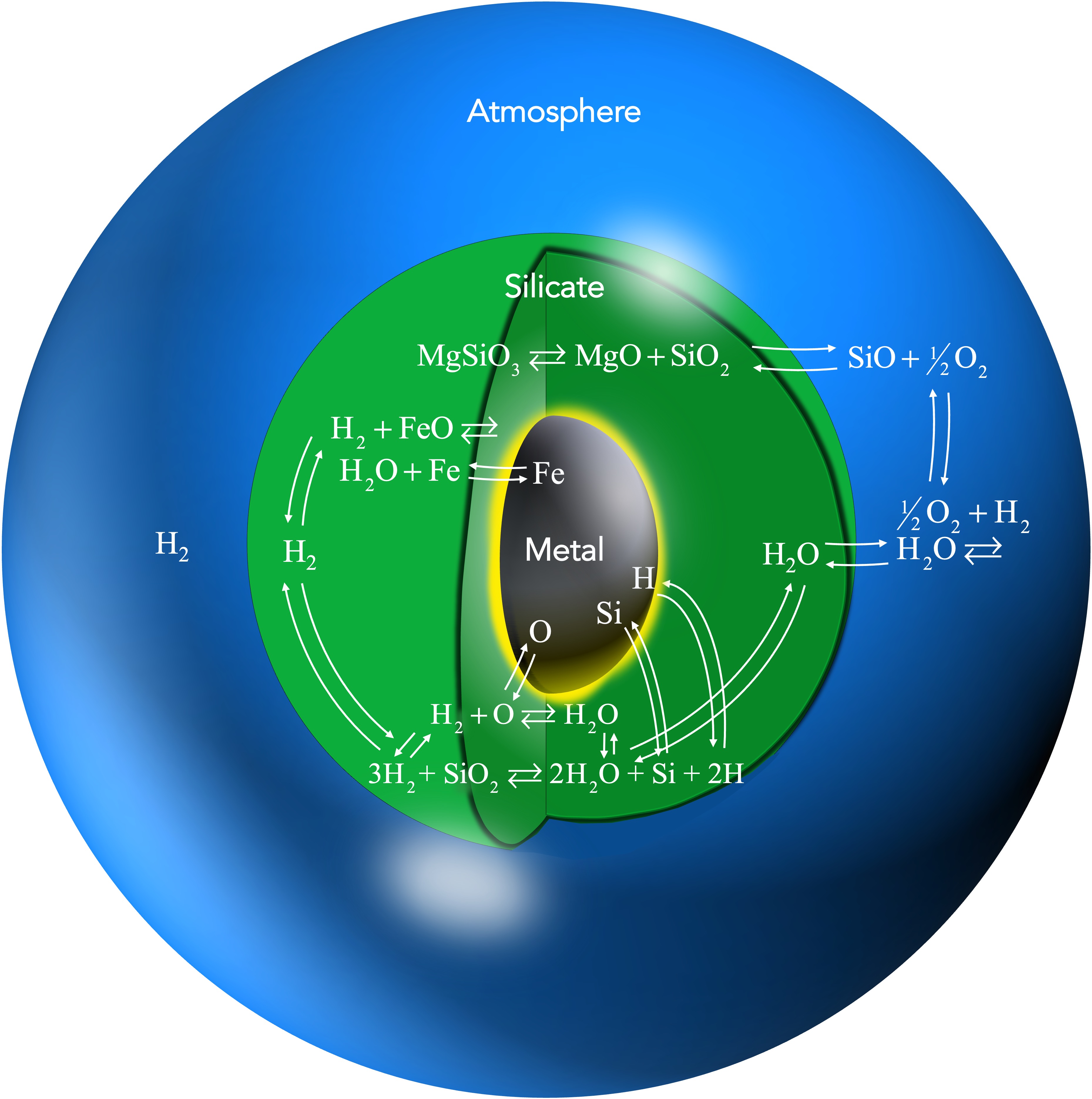
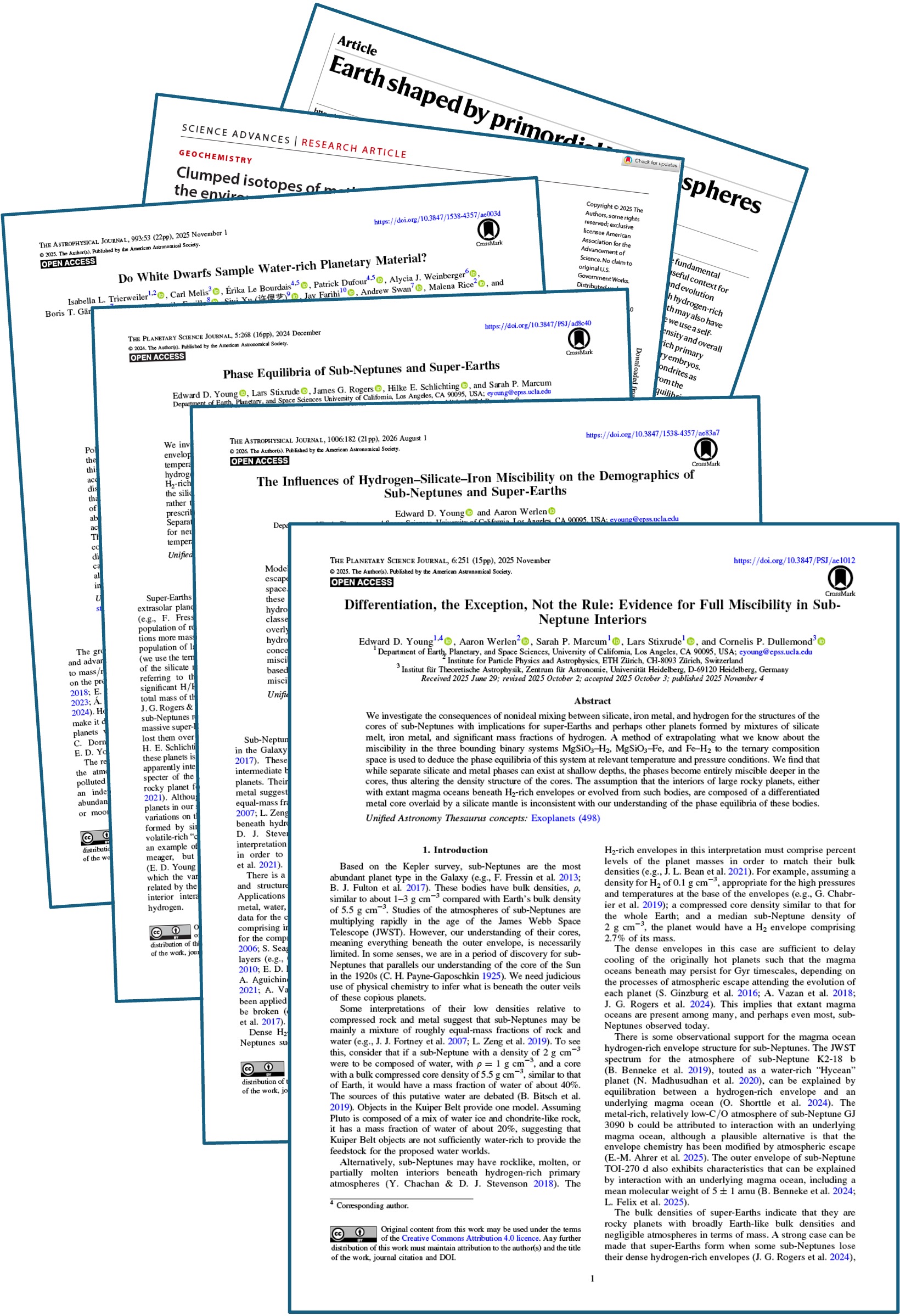
| Exoplanets research — New! |
Browse |
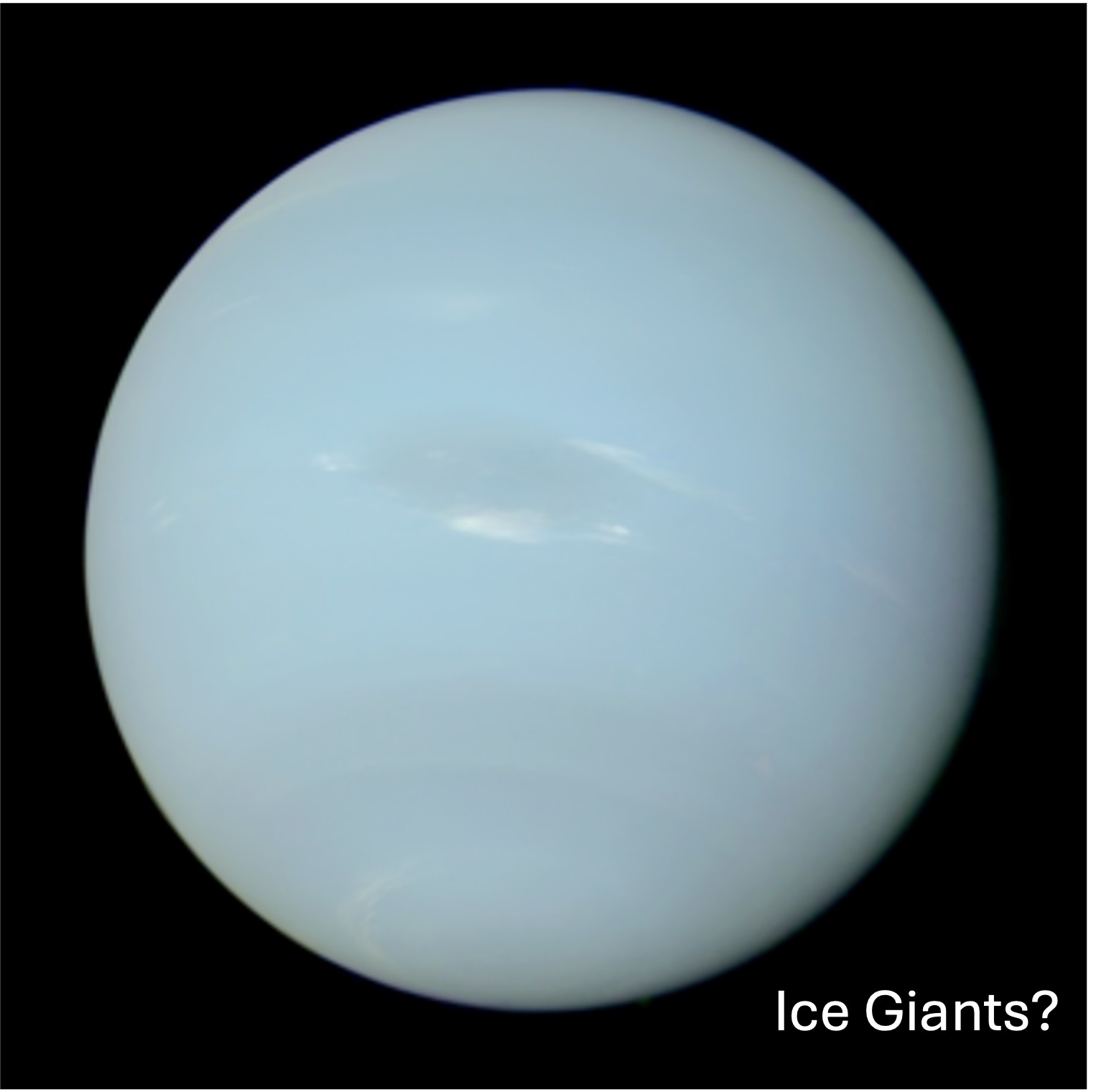
Ice giants study in the news |
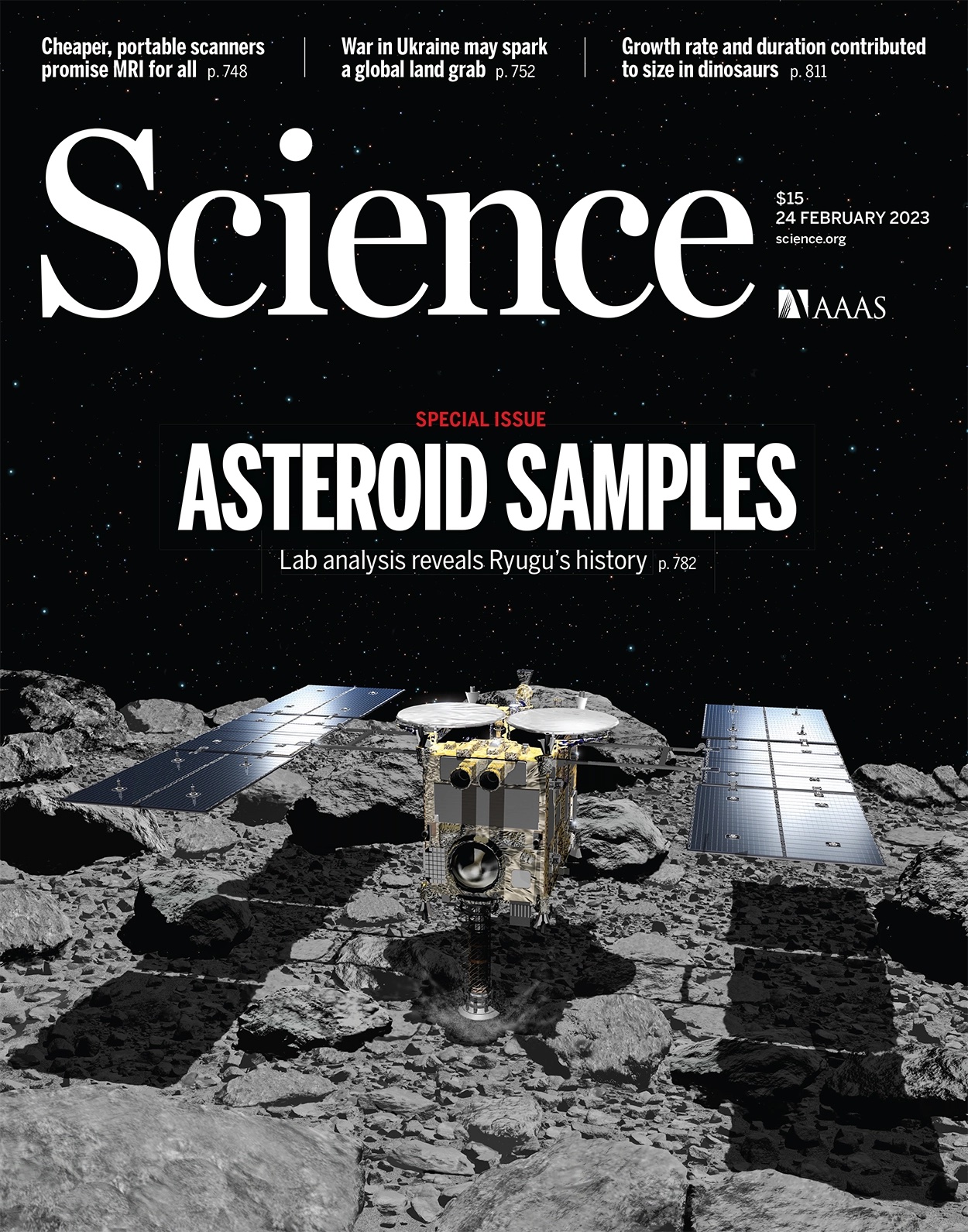
Asteroid Ryugu results |
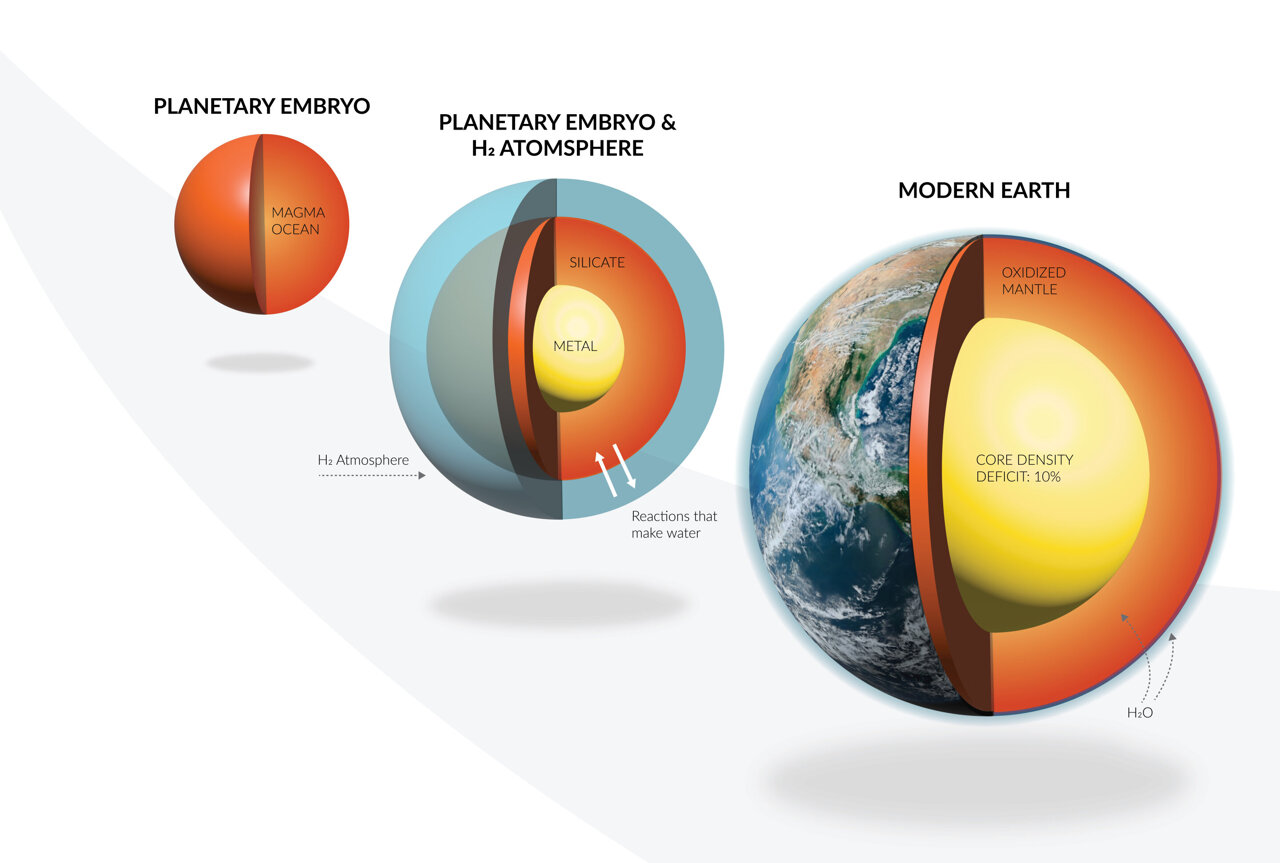
New model for the origin of Earth's oceans |
Goals
Research in the Young Laboratory is directed towards understanding whence we came and our place in the Galaxy. We study the solar system together with star and planet formation elsewhere in the Galaxy. Our studies span planets, both in and beyond our solar system, the Moon, asteroids, and the interstellar medium. We work on the solar protoplanetary disk, ancient minerals in meteorites, the isotope chemistry of the interstellar medium, rocky bodies of the inner solar system, the chemistry of Earth's atmosphere, and studies of the nature of extrasolar planets.
Methods
Our primary targets of study include the chemistry of rocks and gases at relevant conditions, the chemistry of the interstellar medium, and the chemistry of polluted white dwarf stars. We utilize a wide variety of methods that include isotope ratio mass spectrometry, physical chemistry, origins of the radionuclides (nuclear astronomy), and spectroscopic observations of the interstellar medium, among others. Our tools include some of the largest telescopes in the world, vacuum-line experiments, novel mass spectrometers, and a variety of laboratory-based and computational studies.