N2 and O2 chemistry using rare isotopologues
Overview and Methods
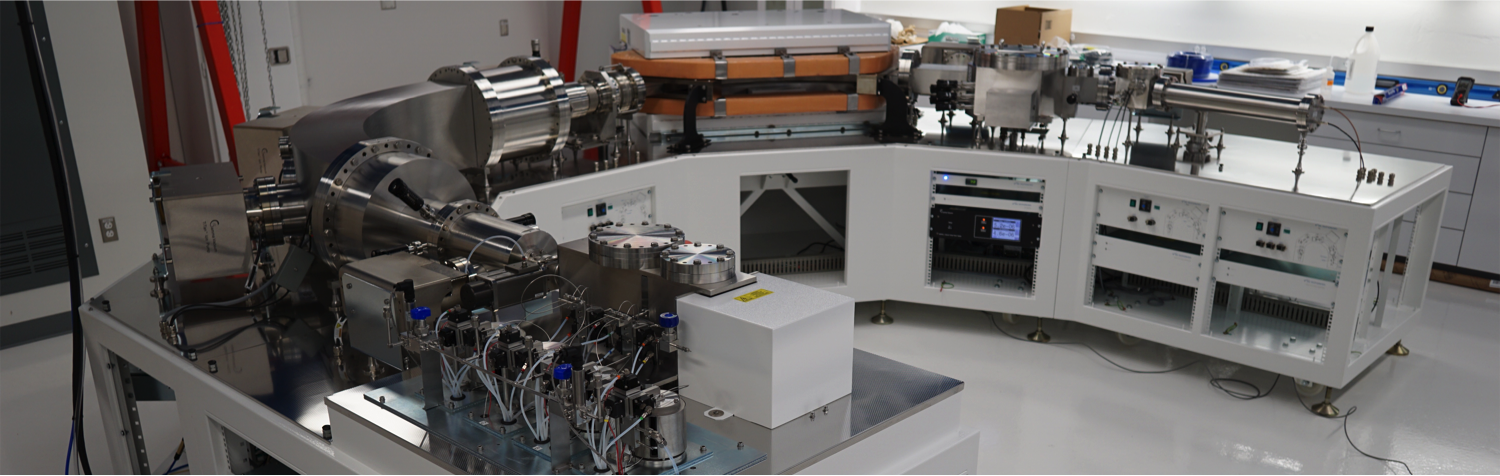
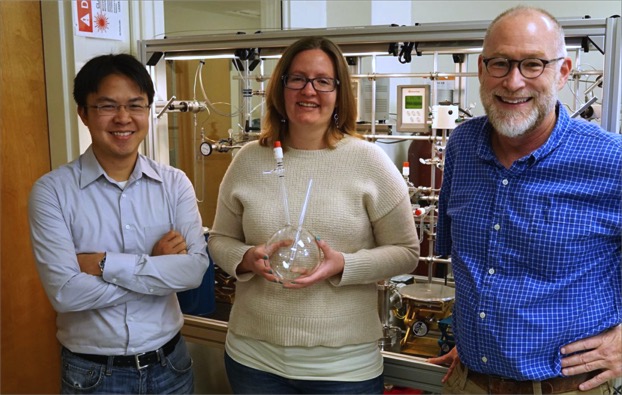
We have utilized novel methods for tracing the origins of N2 and O2 gases. These methods are enabled by the high mass resolution and sensitivity of the Panorama mass spectrometer. Some of our first work on the biological influences on molecular oxygen is described in a paper in Science by Yeung et al. (2015). The image below of former postdoc Laurence Yeung, former graduate student Jeanine Ash, and Ed Young is a link to news coverage on this work.
Discovery of 15N15N Anomaly in Air
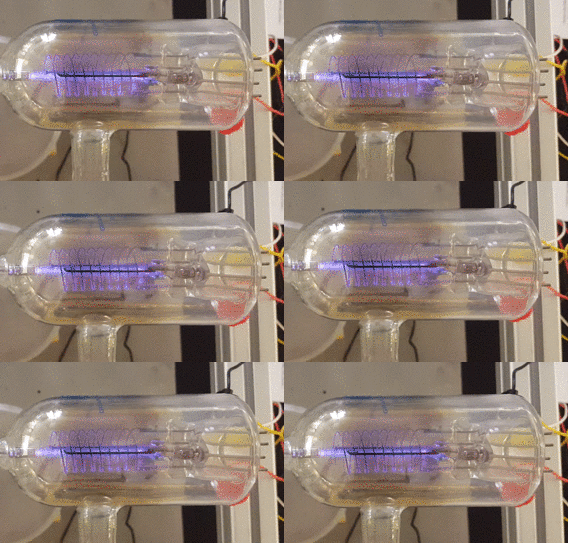
We performed the first measurements of the rare isotopologue 15N15N in Earth's atmosphere. In so doing we discovered (Yeung et al., 2017) that air has a 19 per mil excess of this molecule relative to expectations from thermodynamics and normal biological processing. We used electrolysis expeirments to conclude that this signal is produced in the upper atmosphere. The electrolysis experiments, shown below, were performed in an adapted ion gauge.
15N15N in Volcanic Systems
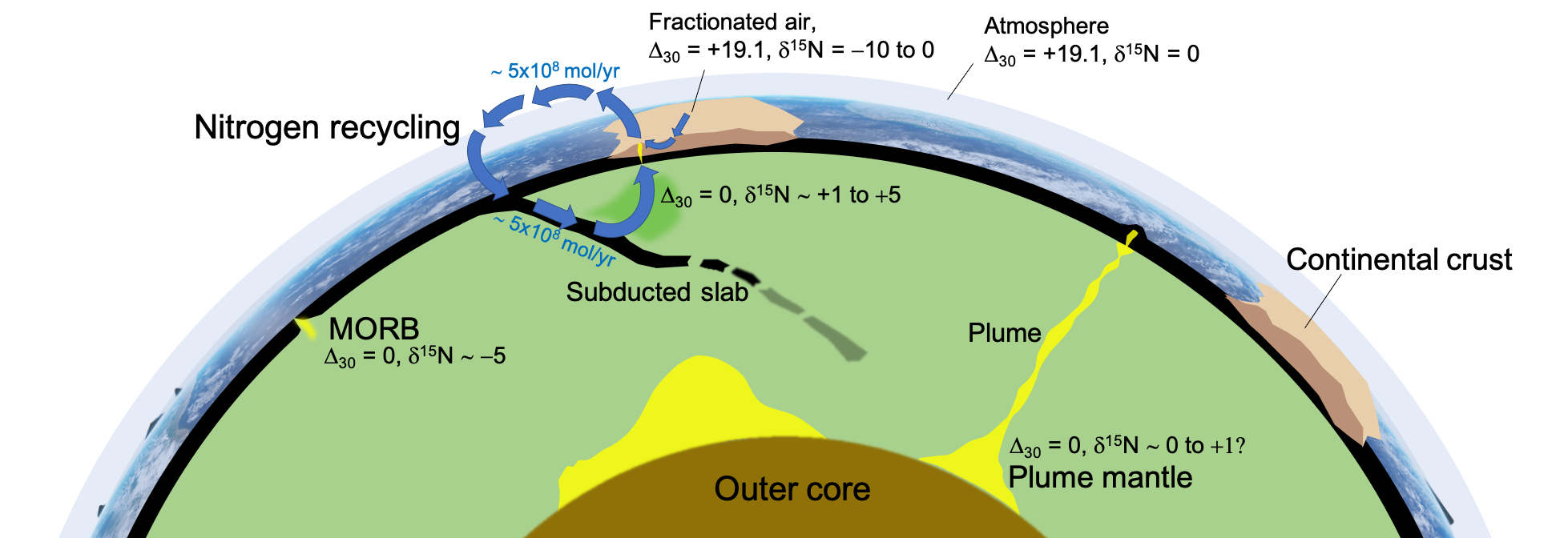
We have utilized this anomaly for a wide variety of low and high-temperature applications. Postdoc Jabran Labidi led projects usingthe rare isotopologue 15N15N in Earth's atmosphere as a tracer of nitrogen recycled through subduction zones. A review by Labidi and Young (2022) summarizes much of this work.
15N15N as a Biogenic Dinitrogen Tracer
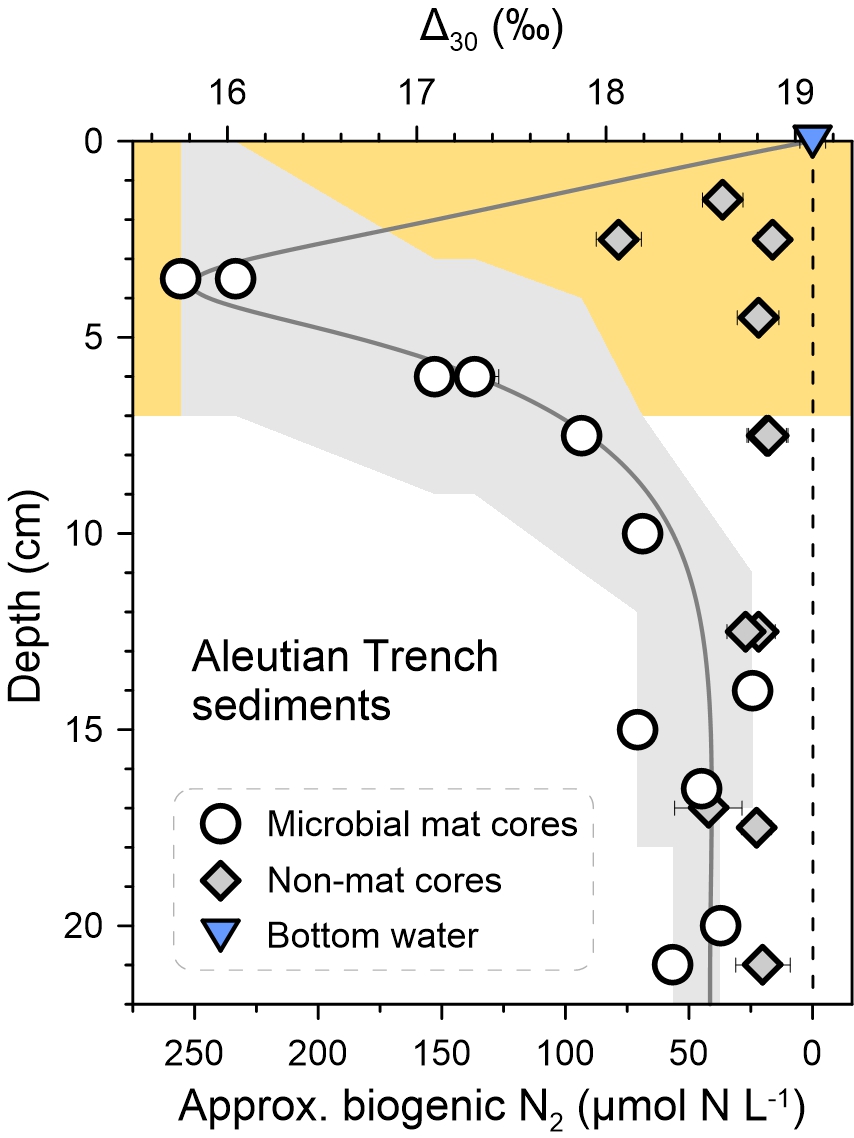
Postodoc Jiarui Liu has led the project to utilize 15N15N in natural waters as a tracer of global denitrification. In this work we show that the natural abundances of this rare isotopologue provide direct tracers of biogenic dinitrogen across diverse aquatic environments. The image below shows the 15N15N signature of nitrogen loss in methane seep sediments of the Aleutian Trench (Liu et al., in press, Science):