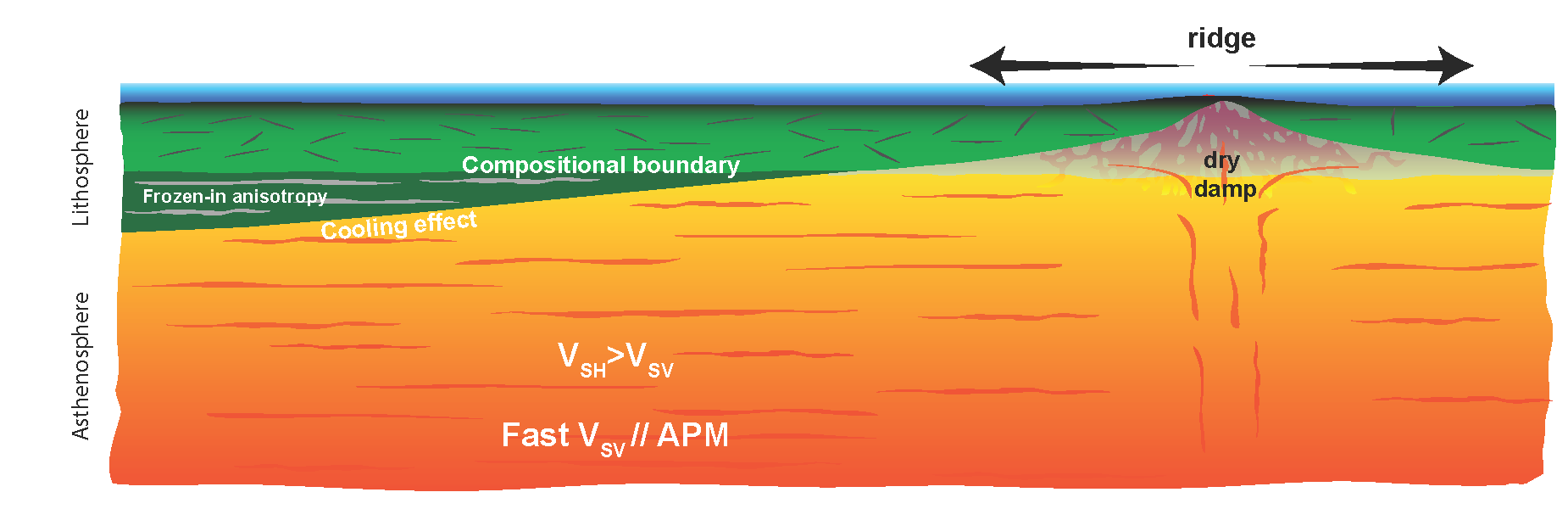
This figure illustrates the Earth’s upper mantle beneath the Pacific ocean. The orange layer represents the deformable, warm asthenosphere in which there is active mantle flow. The green layer on top represents the lithospheric plate, which forms at the mid ocean ridge, then cools down and thickness as it moves away from the ridge. The cooling of the plate overprints a compositional boundary that forms at the ridge by dehydration melting and is preserved as the plate ages. The more easily deformable, hydrated rocks align with mantle flow. The directions of past and present-day mantle flow can be detected by seismic waves, and changes in the alignment of the rocks inside and at the bottom of the plate can be used to identify layering. CREDIT: Nicholas Schmerr (University of Maryland)
Great day at the SSA meeting yesterday. I got to catch up with old friends (Renate Hartog, Chad Trabant, and Meghan Miller) and former postdoc advisor Matt Fouch, and see former undergrads Grave Parker (now at ISGS) and Trey Knudson who have a talk on his phd research at Stanford!
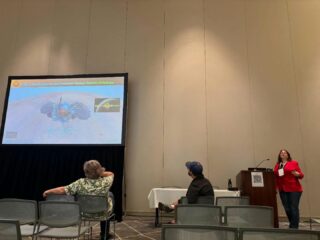
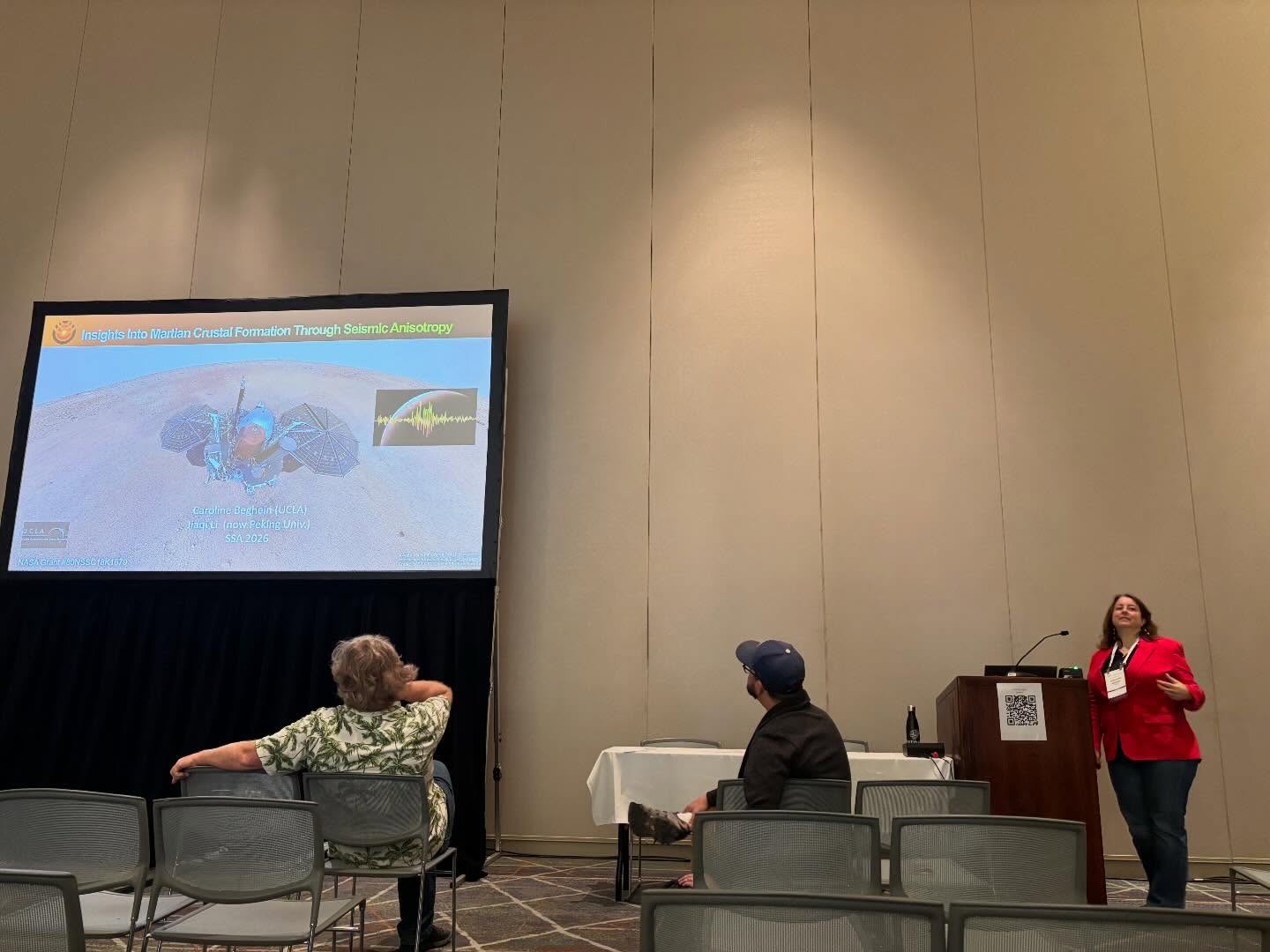
I arrived so early at the convention center that nobody is there! But I had to beat traffic to be on time to upload my slides and give my 8:15am talk at the @seismosocietyam meeting!
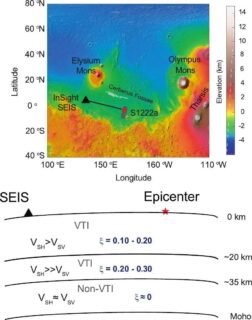
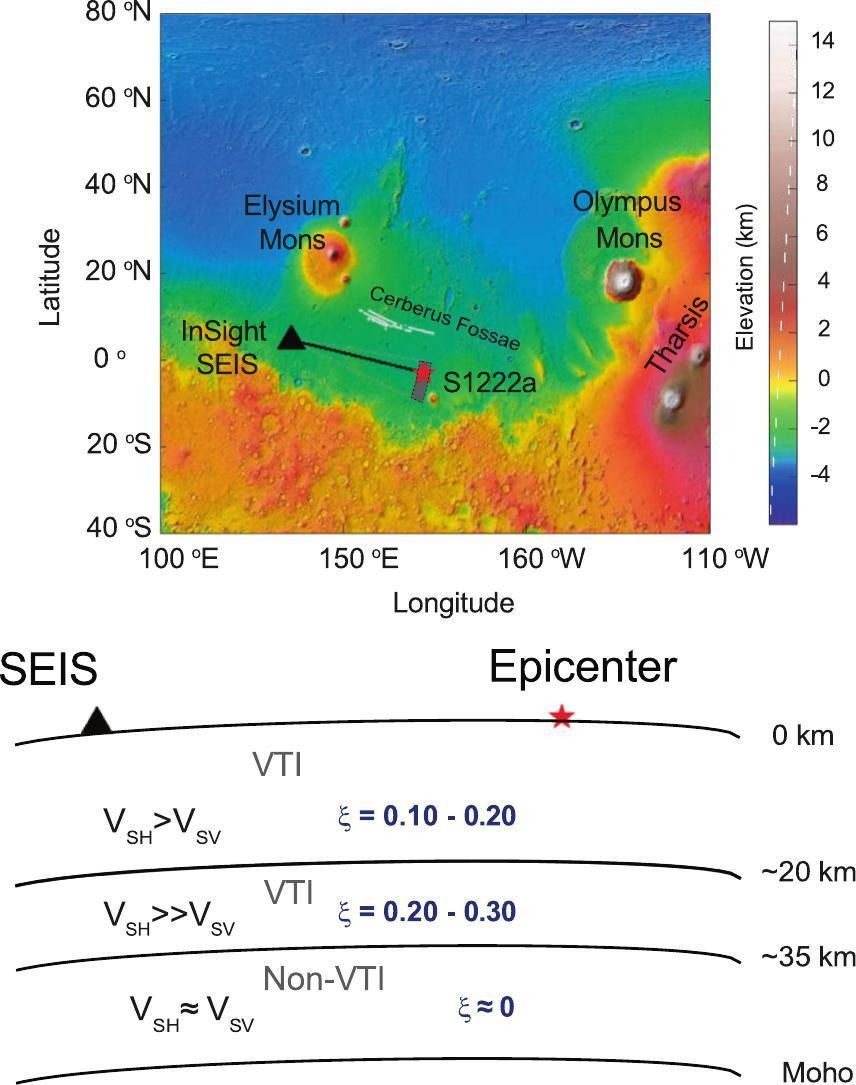
New paper alert! Our latest research on the Martian crust was accepted for publication in PEPI (doi: 10.1016/j.pepi.2025.107453). It will be free for everyone to read online within the next few hours. Research done at @uclaepss #mars #marsinsight #martiancrust #seismology #seismicanisotropy #nasa #spaceexploration #ucla