

Aeolian Reference
Aeolian Reference Images
{This page is under construction – Thank you for your patience}
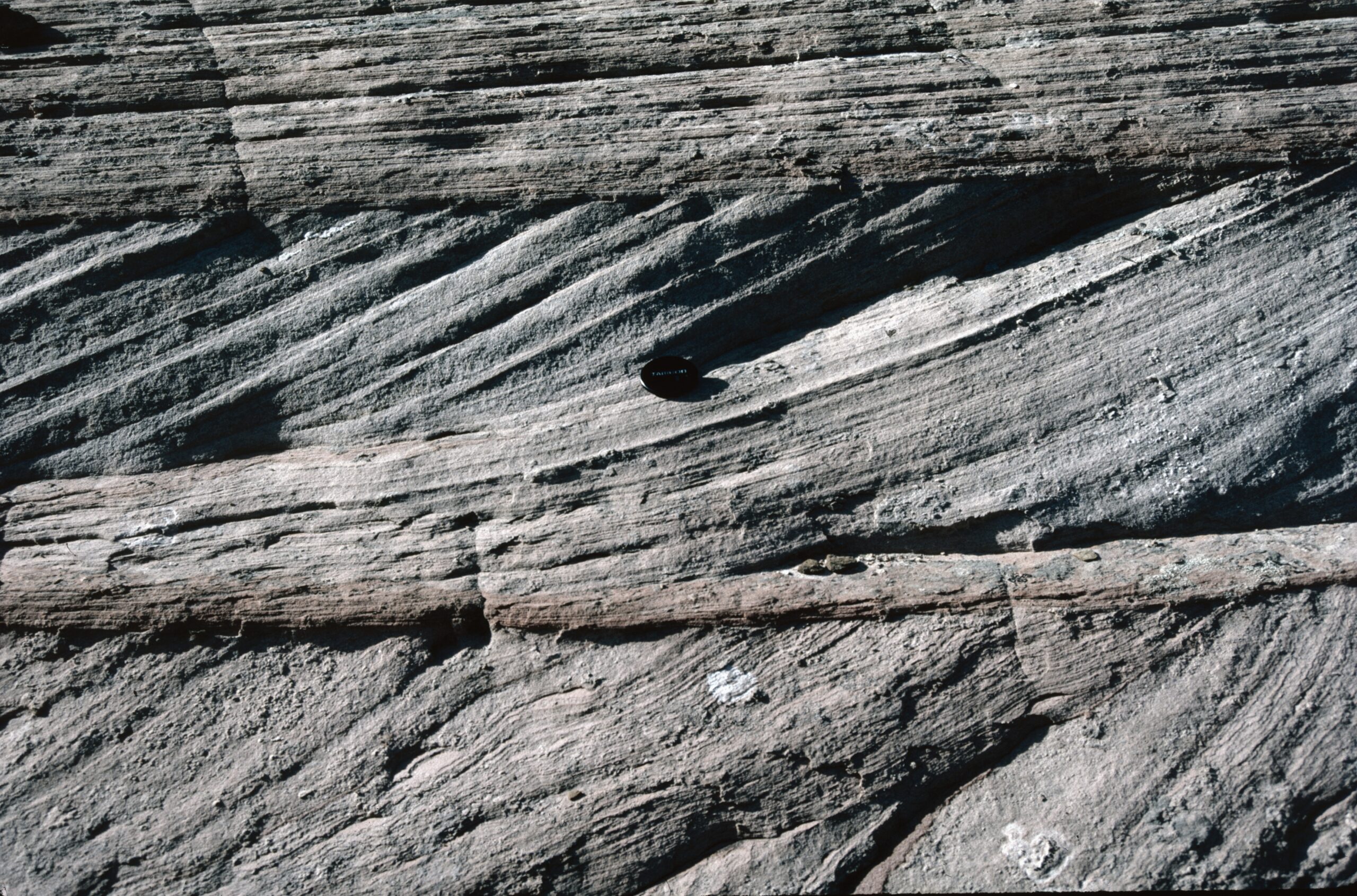
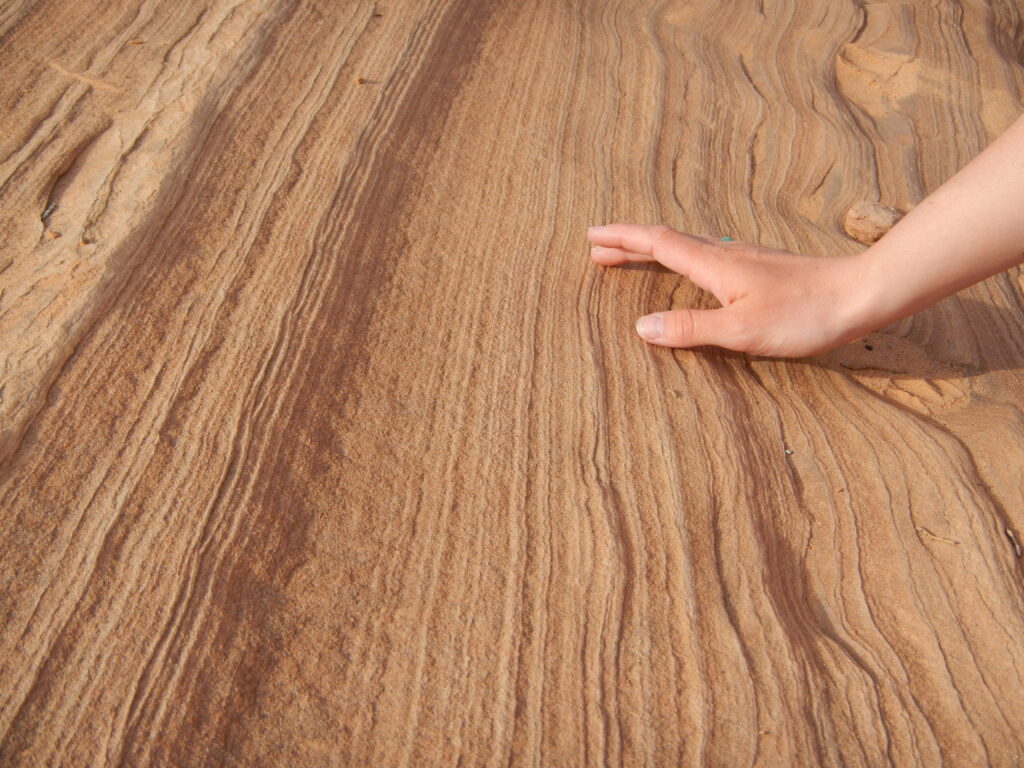
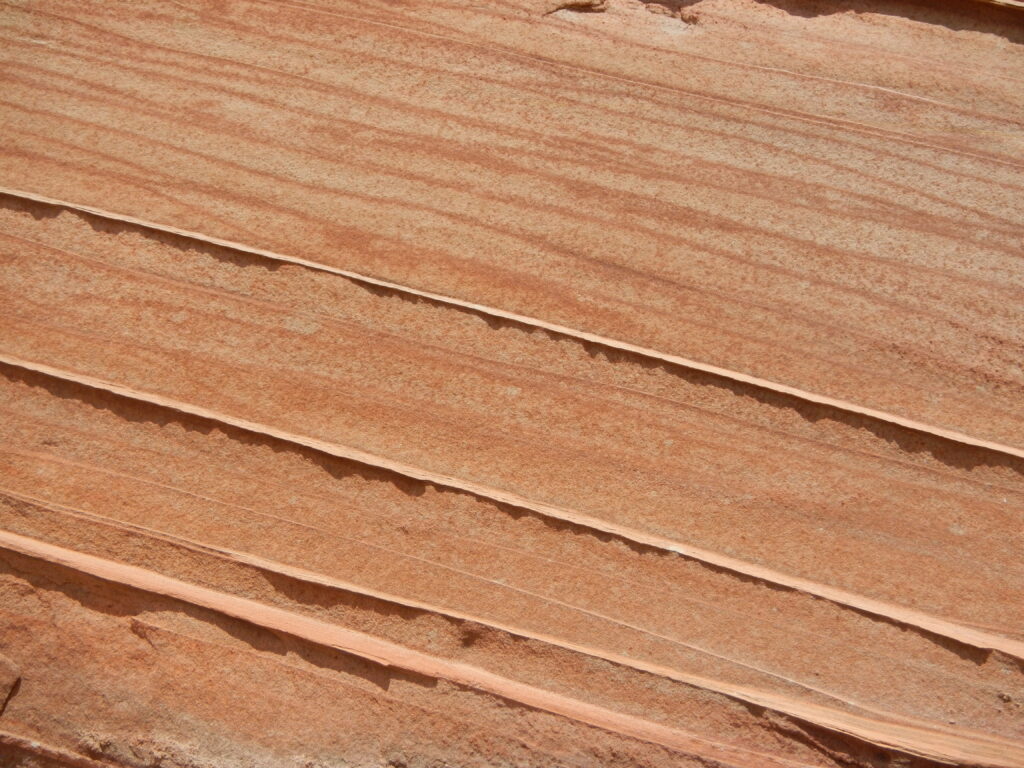
Aeolian sandstones record the passage of ancient dunes with sets of cross strata separated by bounding surfaces. The cross stratification type (wind ripple, grainfall, or grainflow), bounding surface architecture, and additional sedimetnary structures all provide clues to the ancient environment and behavior of the dunes. Together, aeolian sandstone architectures form a complex web of puzzle pieces for unraveling the stratigraphy and history of the ancient dunes.
This page provides reference images for some common (and some uncommon) structures and architectures seen in aeolian sandstones. All images come from aeolian sandstone exposures in the United States and were collected by either Mackenzie Day or Gary Kocurek. Additional images are welcome – please contact Mackenzie Day at daym@epss.ucla.edu. This page is a work in progress for teaching and reference purposes and will be supported by peer-reviewed publications in the works.
Bounding surfaces
Bounding surfaces truncate aeolian strata, defining the edges of individual sets (1st order bounding surfaces), superimposed sets (2nd order), erosion from dune reorientation (3rd order), and dune-dune interactions and combinations (4th order or “interaction surfaces”).

Deformation
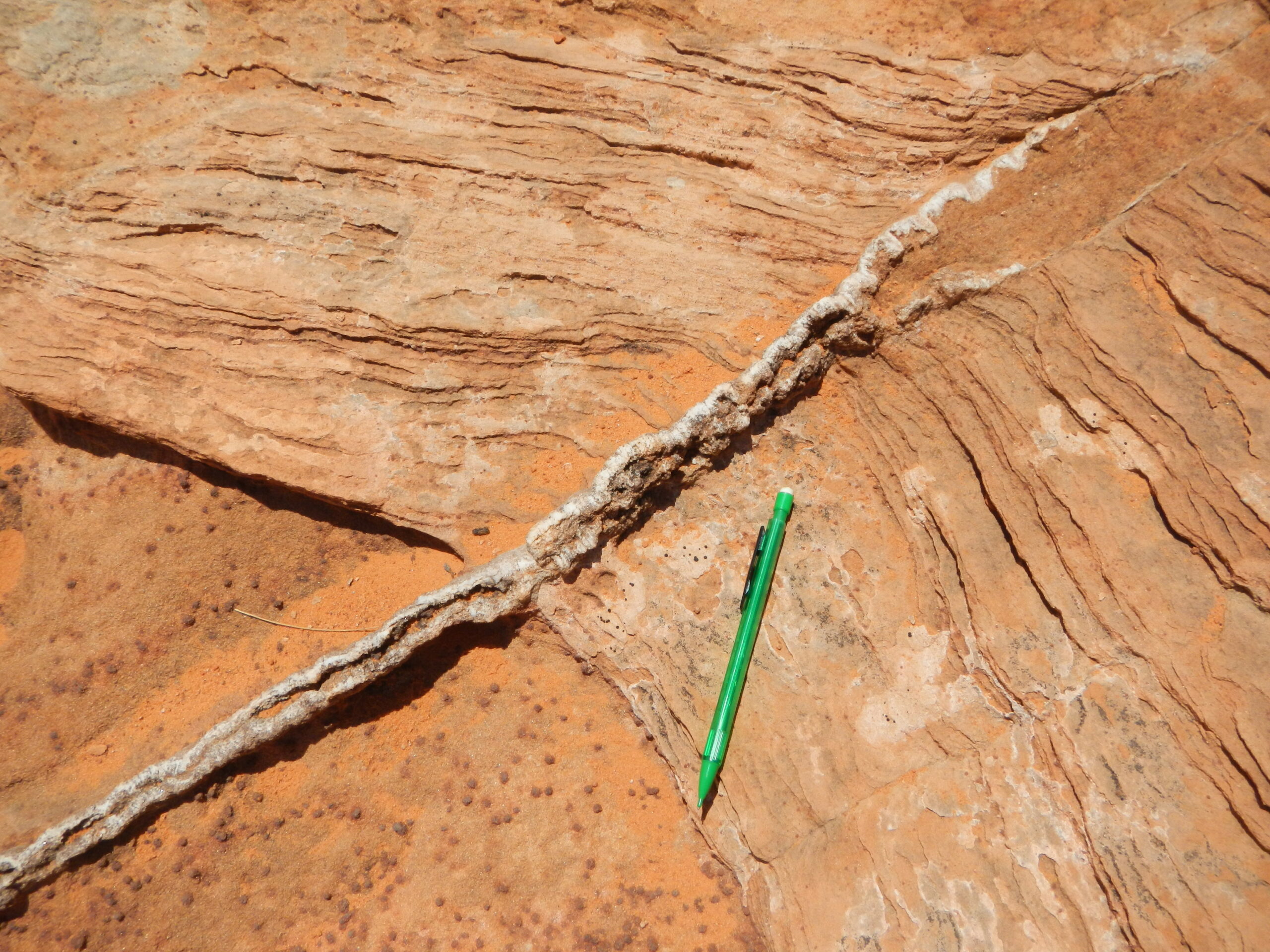
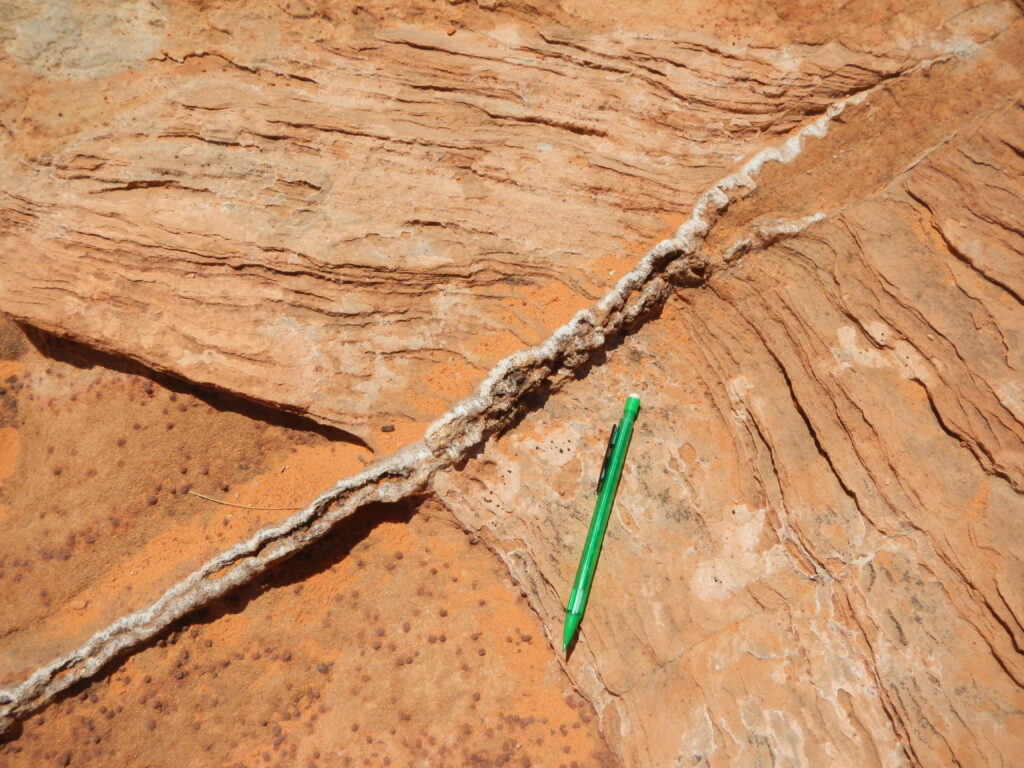
Collapse of the sand structure can have a range of causes, each providing a clue to the paleo-environment.
Stratification Types
Wind ripple, grainflow, and grainfall strata appear differently in the rock record and have differing effects on porosity, permeability, and diagenesis. Recognizing differences between each provides context for the history of diagenetic fluid flow, as well as where on the dune the section was deposited.

Ventifacts and Abrasion
Ventifacts form in response to prolonged aeolian saltation impacting the rock surface. Characteristic patterns on the rock surface reflect the recent sand-transporting wind direction.
References
Brookfield, M. E. (1977). The origin of bounding surfaces in ancient aeolian sandstones. Sedimentology, 24(3), 303-332.
Day, M., & Kocurek, G. (2017). Aeolian dune interactions preserved in the ancient rock record. Sedimentary Geology, 358, 187-196.
Knight, J. (2008). The environmental significance of ventifacts: a critical review. Earth-Science Reviews, 86(1-4), 89-105.
Kocurek, G. (1981). Significance of interdune deposits and bounding surfaces in aeolian dune sands. Sedimentology, 28(6), 753-780.
Kocurek, G. (1988). First-order and super bounding surfaces in eolian sequences—bounding surfaces revisited. Sedimentary Geology, 56(1-4), 193-206.
Laity, J. E., & Bridges, N. T. (2009). Ventifacts on Earth and Mars: Analytical, field, and laboratory studies supporting sand abrasion and windward feature development. Geomorphology, 105(3-4), 202-217.